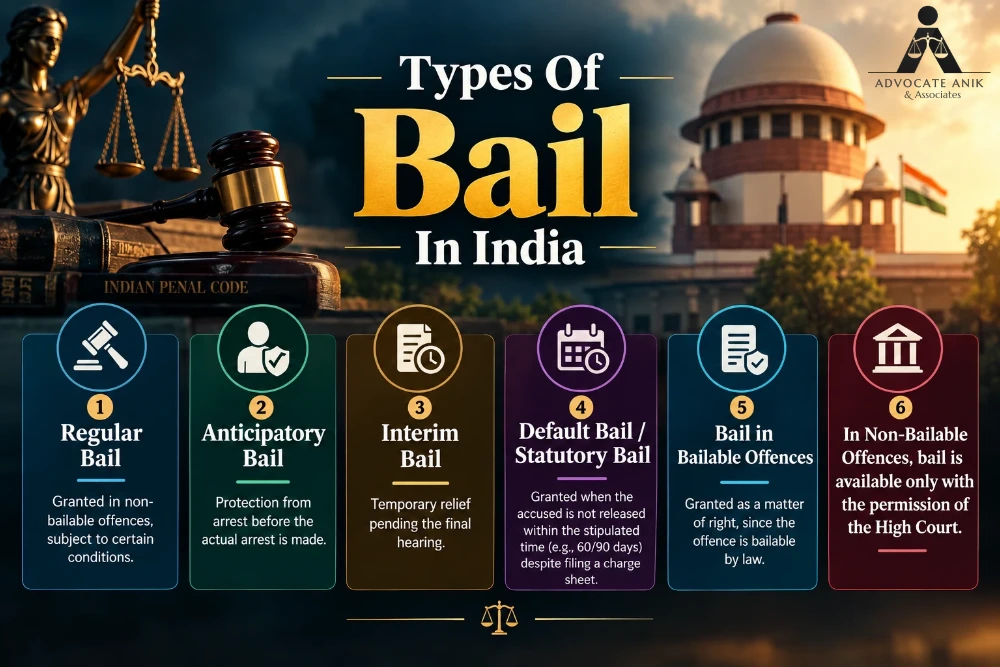
Most people only start thinking about bail once they, or someone close to them, actually needs it and by then, the terminology can feel like a wall. Regular bail, anticipatory bail, default bail, bailable, non-bailable; these aren’t interchangeable words, and using the wrong one at the wrong stage can cost you time you don’t have.
Put simply, bail is the legal mechanism that allows a person to remain out of custody while a criminal case against them is pending, usually on certain conditions and often against a bond or surety. It exists in different forms because arrest and custody happen at different points in a criminal proceeding, and the law responds differently depending on where you are in that timeline whether you’re already in custody, worried you might be arrested, or caught in an investigation that’s dragging on. It’s also worth being clear on one distinction early: bail is not the same as being cleared of the case. It simply means you’re not in custody while the case runs its course.
This post walks through the main types of bail available under Indian law, when each one applies, and how the process generally works if you’re looking to apply. If your situation is more urgent, it may help to speak directly with a criminal lawyer in Bangalore rather than working through this alone.
What is Bail?
At its core, bail is the temporary release of a person accused of an offence, granted by a court (or, in some cases, the police) subject to conditions meant to ensure the person shows up for trial and doesn’t interfere with the investigation. It isn’t a verdict on guilt or innocence that question is decided much later, at trial. Bail exists because the law recognises a basic principle: a person is presumed innocent until proven guilty, and locking someone up before that determination is made should be the exception, not the default.
That said, bail isn’t automatic. Courts weigh it against the needs of the investigation and the interests of justice, which is exactly why the different types of bail exist; each is designed for a different moment in the life of a criminal case. For more detail on how these categories differ from one another, see our dedicated guide to types of bail.
What Are the Main Types of Bail in India?
1. Regular Bail
Regular bail is one of the common remedies which arises once the person has been booked into custody. An application sought by the court for the purpose of obtaining release pending trial, which clearly involves the on-going arrest and custody. If you wish to know about the specific procedures for the local area, please refer to our detailed blog on “how to get bail in Bangalore”.
2. Anticipatory Bail
When someone has a reasonable apprehension of being arrested for a non-bailable offence, he seeks anticipatory bail. This is the protection order that’s issued prior to an arrest, not after. If you wish to know about the specific procedures for the local area, please refer to our detailed blog on “Anticipatary bail in Bangalore”
3. Interim Bail
Interim bail is a bail for a temporary period or for a specific period. The situations in which it may be sought may include any emergency or situations where, for example, a regular or anticipatory bail application is pending in a higher court and the person wishes to be released from such bail. The situations where it can be sought include emergencies such as a family funeral, major medical issues and when a person seeks to get released from a regular or anticipatory bail pending with a higher court.
4. Default Bail / Statutory Bail
This is a very specific type of bail and relates directly to investigation time frames. The law states that when the investigating agency doesn’t file the charge sheet within the stipulated period, the accused holds an ‘indefeasible right to release’ if they fulfil all legal conditions.
5. Bail in Bailable Offences
A person is entitled to get bail in bailable offences. In general, the police or the court shall release the person when he/she has posted a bond. The most important difference with non-bailable offences is that there is no room for the judge’s discretion on whether or not to grant bail.
6. In Non-Bailable Offences, bail is available only with the permission of the High Court.
Bail is not automatically granted in non-bailable offences, and is subject to the discretion of the court. Judges look at a variety of factors that are relevant to the crime committed and the defendant, before deciding to release or deny the defendant’s release.
Regular Bail vs Anticipatory Bail
To understand the distinctions clearly, here is a comparison:
| Basis | Regular Bail | Anticipatory Bail |
| Stage | Applied for and granted after an arrest has been made. | Applied for and granted before an arrest is executed. |
| Arrest | The individual is already in physical or judicial custody. | Based entirely on the apprehension or fear of an impending arrest. |
| Purpose | To secure release from an ongoing custodial detention. | To prevent an arrest from happening in the first place. |
| Court | Can be granted by a Magistrate, Sessions Court, or High Court. | Can only be granted by the Sessions Court or High Court. |
| Nature of protection | Provisional release pending trial or investigation. | Pre-arrest protective directive. |
For more detail on how these categories differ from one another, see our dedicated guide on regular bail v. anticipatory bail.
Bailable Offence vs Non-Bailable Offence
Here is how the law treats these two categories:
| Basis | Bailable Offence | Non-Bailable Offence |
| Nature of bail | Claimed as a fundamental matter of right. | A privilege granted conditionally by the court. |
| Court discretion | No discretion; bail must absolutely be granted. | Extensive discretion based on case facts and severity. |
| Arrest situation | Generally, it involves less serious or minor crimes. | Involves severe, heinous, or socially impactful crimes. |
| Legal process | Bail can often be secured at the police station itself. | Requires a formal application before a judge. |
What Factors Do Courts Consider While Granting Bail?
1. Nature and Seriousness of the Allegations
The difficulty and seriousness of the case is taken into account when granting bail. Bail is granted (or denied) based on the seriousness and nature of the case, however, determined by the court.
2. Possibility of the Accused Absconding
There is a possibility that the Accused Absconding may occur. When deciding if there is any substantial risk that the accused will flee to another country and avoid taking part in the proceedings, courts take into account the circumstances.
3. Risk of Influencing Witnesses
If there is a sincere belief that the person who is being charged might be able to coerce or tamper with witnesses or evidence if he or she is let go, then bail is not allowed.
4. Previous Criminal Record
An innocent “clean” charge is of benefit to the accused but a criminal record, particularly a similar one, will detract from this.
5. Need for Custodial Investigation
Where the investigating agency can demonstrate that it seeks to investigate and has a need for the accused to be kept in custody for purposes like evidence, further questioning etc, courts will be more inclined to deny bail to the accused.
How to Apply for Bail in Bangalore?
1. Identify the Applicable Type of Bail
The first step is determining whether an arrest has occurred and evaluating the offense to properly identify the applicable type of bail.
2. Prepare the Bail Application
The preparation of the bail application is crucial and it’s imperative that it is done with care; that it sets out the basis for the bail and brings with it the requisite supporting documentation.
3. File Before the Appropriate Court
The application shall be lodged in the proper court, that is, either Magistrate, Sessions Judge or the High Court, as the case may be, with an official intimation to file the said application.
4. Court Hearing
At the court hearing, your counsel and the State Attorney will give closing arguments. The argument will be presented to the judge who will consider them before ordering.
5. Bail Conditions
Where relief is granted, the court will impose conditions upon granting the relief such as giving the court sureties, or giving up passport, etc., which are to be strictly complied with. For detailed understanding read our blog on how to get bail in Bangalore.
What Happens If Bail Is Rejected?
1. Reapplying for Bail
The accused often has the legal right of reapplying for bail if the initial petition fails.
2. Approaching a Higher Court
If a lower court rejects the plea you can approach a higher court.
3. Changes in Circumstances
Courts will frequently entertain a new application if there are substantial changes in circumstances, such as a prolonged delay in the trial or newly discovered evidence.
Why Should You Consult a Criminal Lawyer for Bail?
The laws surrounding physical liberty are highly complex and strictly procedural. Securing freedom requires sharp legal arguments and extensive courtroom advocacy. Bail applications move fast, and the details matter which type of bail applies, which court has jurisdiction, what the application needs to establish, and how to respond if it’s opposed. Getting this wrong can cost real time, and time in custody isn’t something you get back. An experienced criminal lawyers in Bangalore can help you identify the right approach for your situation and make sure your application is presented in the strongest possible way from the outset
Conclusion
Bail in India isn’t one single procedure; it changes depending on where you are in a case, whether you’ve already been arrested or are trying to stay ahead of one, and how serious the offence is. Regular bail, anticipatory bail, interim bail, default bail, and the bailable/non-bailable distinction each serve a different purpose, and which one applies to you depends entirely on your specific circumstances.
Frequently Asked Questions About Types of Bail in India
1. What is interim bail?
Interim bail is the most temporary form of release granted by the judge in an emergency or pending a hearing for a formal and regular request for bail.
2. What is default bail?
When police do not submit the charge-sheet in the prescribed time after the investigation, the accused person is granted default bail.
3. Can bail be granted after an FIR is registered?
Yes, if a person is apprehensive of getting arrested after filing an FIR for a non-bailable offence, then he or she can proactively apply for anticipatory bail.
4. What happens if bail is rejected?
You can appeal in the higher court.
5. How can I apply for bail in Bangalore?
First you need to consult a lawyer, the lawyer will take care of drafting the bail petition with the facts and suitable grounds. Subsequently the lawyer will file the bail petition in the court.
6. Do I need a criminal lawyer to apply for bail?
Yes, the procedural criminal law is very complex and you need a professional lawyer to prepare the application, guide you through the court system and make strong legal points to get you released.